Skip to the page

Keel, Rail & Spoke

Search

Every journey is a machine tested against a distance.

A history of how things move and how people got there: railways, ships and wrecks, bicycles, and long journeys told from their logs and inquiry reports. Not a bike shop, a ticket seller or a travel guide.

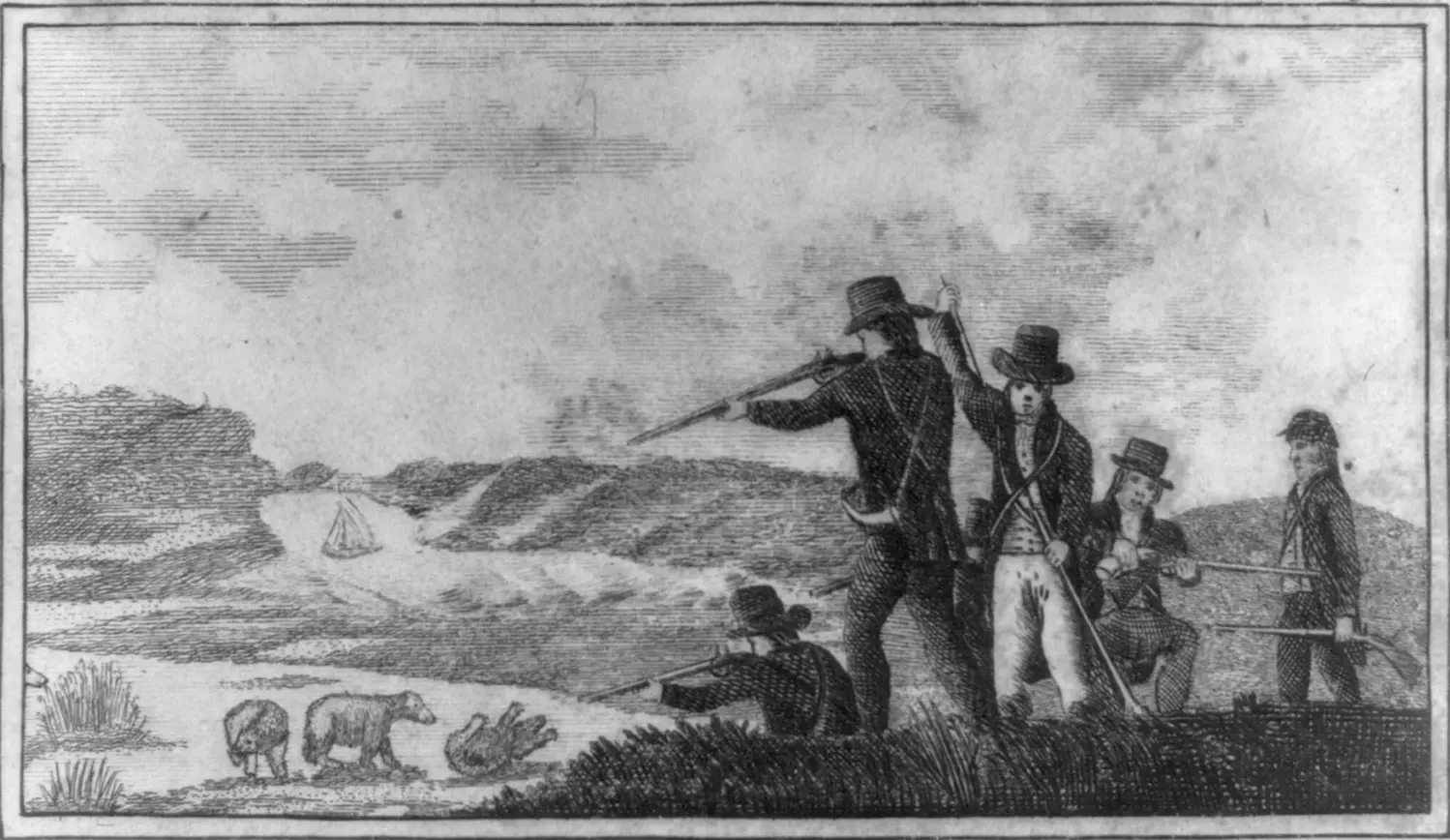
Etching: men in hats fire rifles at three bears on a riverbank, with a sailing boat on the river behind them

Journeys & Expeditions

Lewis and Clark Expedition: Lewis’s Iron Boat Leaked, 1805

The Lewis and Clark Expedition took 862 days. Clark put the way out at 4,134 miles, and Lewis's iron-framed boat leaked at the Great Falls in July 1805.
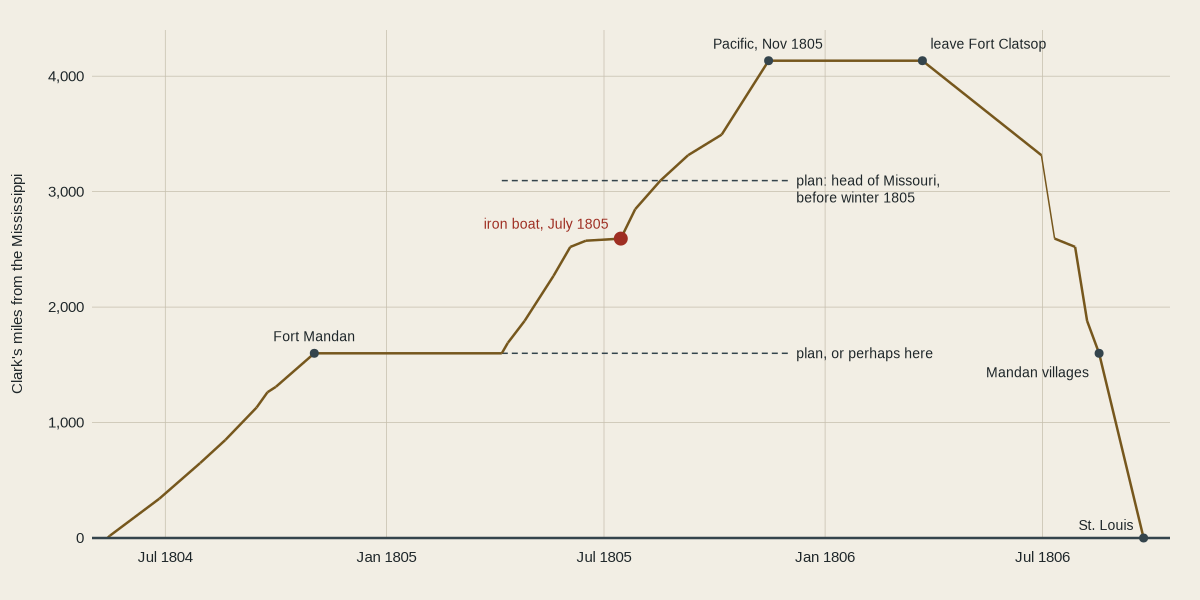
Diagram: time-distance strip, Camp River Dubois to the Pacific and back to St. Louis, 1804–1806: 862 days
Across: time. Up: distance. The slope is the speed.
Picture credit

"Captain Clark and his men shooting bears" by unknown creator — https://commons.wikimedia.org/wiki/File:Captain_Clark_and_his_men_shooting_bears_LCCN2001699664.jpg — Public domain (US: published 1810, before 1931; elsewhere: creator unknown, published more than 200 years ago, every term expired); modified: cropped: printed title and page number removed

"Lewis and Clark Expedition: time-distance strip, 1804-1806" by Keel, Rail & Spoke, https://keelrailandspoke.com/journeys/lewis-and-clark-expedition/, licensed under CC BY 4.0 (https://creativecommons.org/licenses/by/4.0/).
Latest legs

Four departures

Railways

Steam and early electric locomotives, signals and points, track engineering, routes and stations, and how railways changed time and cities.

Ships & Wrecks

Hulls and rigging, navigation, lighthouses, wrecks with an official inquiry behind them, and underwater archaeology.

Bicycles

How bicycles balance, transmit power and change gear, how the machine evolved from the draisine to the safety bicycle, and what it did to society; principles and history only, no repairs or reviews.

Journeys & Expeditions

Polar, river, ocean and round-the-world journeys told from their records: the preparation, the route, the vehicles, what went wrong and who came back.

Three reckonings

The measures this site uses on every journey.

walking multiple
Speed divided by a 5 km/h walk, always with its basis named.
repair radius
How far the fault was from the nearest place on record that could fix it.
last spare
The one item whose running out, on the evidence, ended the journey.

Walking multiples so far

Compared only within the same basis. What the number means

Also departing

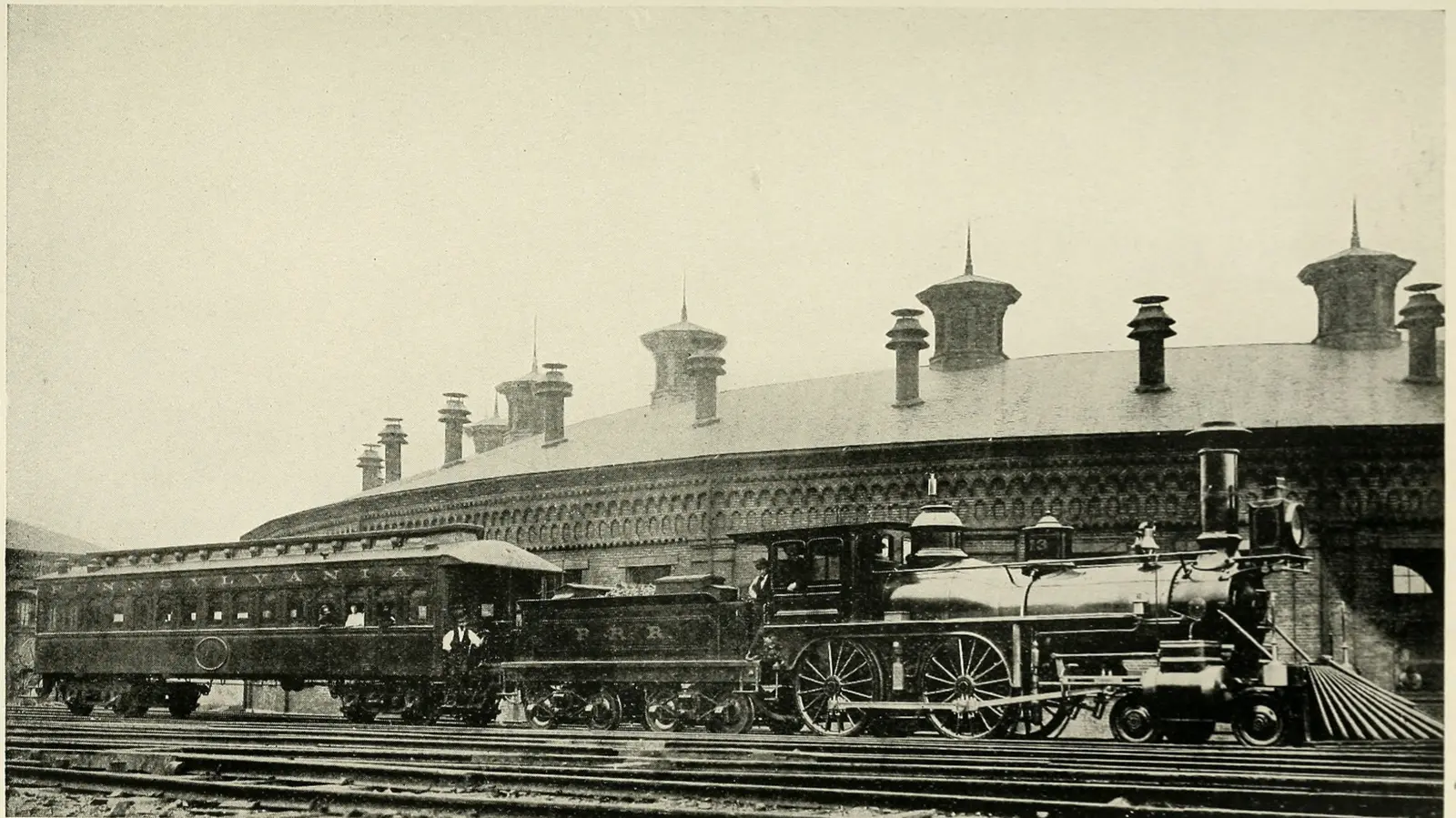
Photograph: Pennsylvania Railroad locomotive and passenger car beside a roundhouse, men on the step and cab, tracks in front

Railways

Air Brake, Patented 1872: Losing Pressure Stops the Train

George Westinghouse's 1872 patent: each car stores air, and a fall in pipe pressure applies its brakes. By the 1901 company book, so does a burst hose.

Picture credit

"Train used to test Westinghouse Air Brake in Pittsburgh (cropped)" by unknown creator — https://commons.wikimedia.org/wiki/File:Train_used_to_test_Westinghouse_Air_Brake_in_Pittsburgh.png — Public domain (US: published in Leupp, George Westinghouse: His Life and Achievements, Little, Brown, copyright 1918, file page gives 1919, both before 1931; elsewhere: photographer unnamed, an anonymous work published more than 70 years ago); modified: cropped: printed book caption below the photograph removed