Railways
Steam and early electric locomotives, signals and points, track engineering, routes and stations, and how railways changed time and cities.
Railways
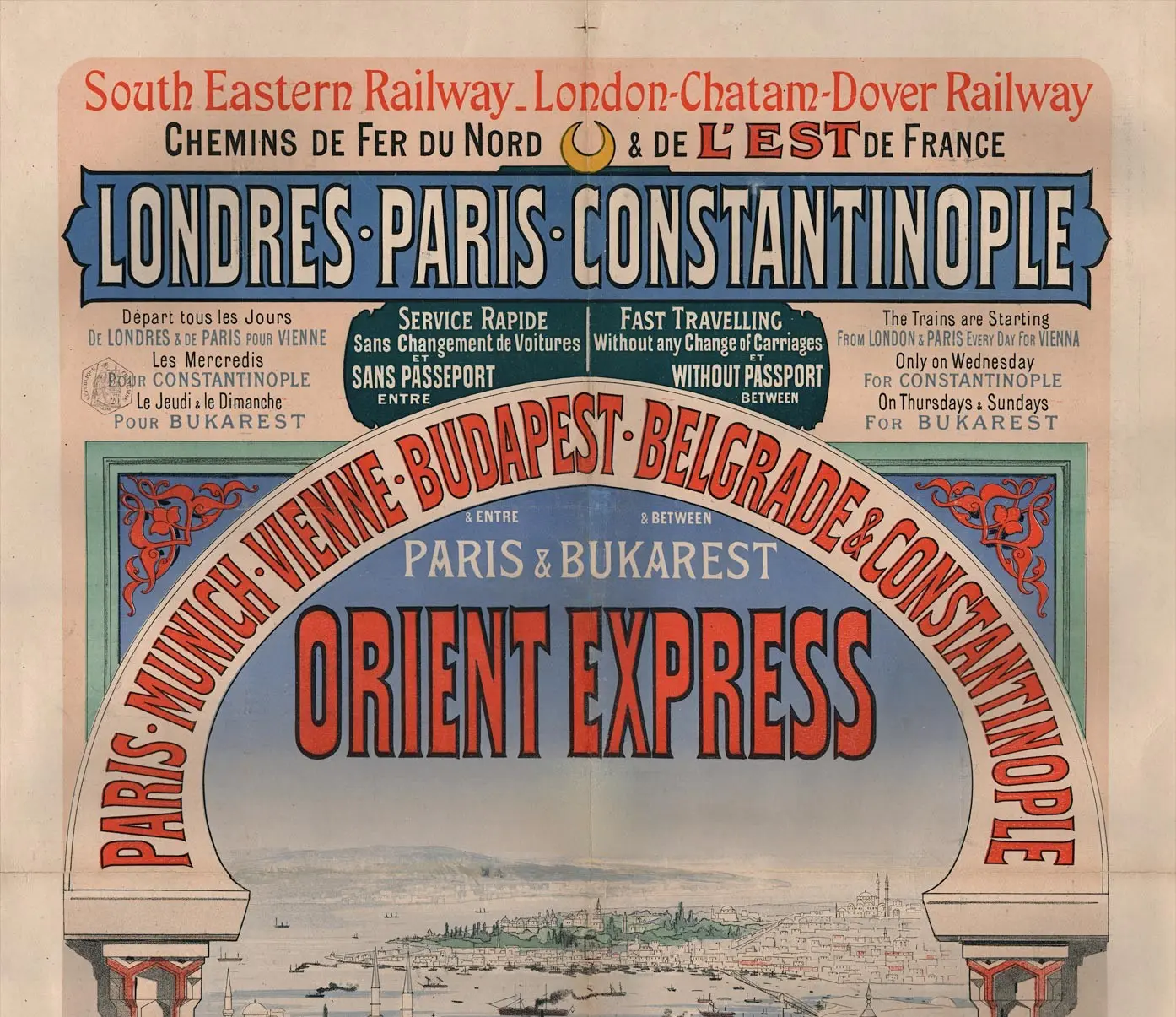
Orient Express, 1883: The Last Leg Was a Boat From Varna
The inaugural Orient Express left Paris on 4 October 1883 but stopped at the Danube. Two 1884 accounts show its last leg to Constantinople was by ship.
Picture credit
"Londres-Paris-Constantinople, Orient Express, poster, winter 1888-89 (top half)" by Jules Chéret or Imp. Chaix (Succ. Chéret) — https://commons.wikimedia.org/wiki/File:Aff_ciwl_orient_express4_jw.jpg — Public domain (US: published 1888, before 1931; elsewhere: the file page credits Jules Chéret (died 1932) and the sheet is signed Imp. Chaix (Succ. Chéret); term expired on either reading); modified: cropped: top half of the sheet, above the route map and timetable

Railways
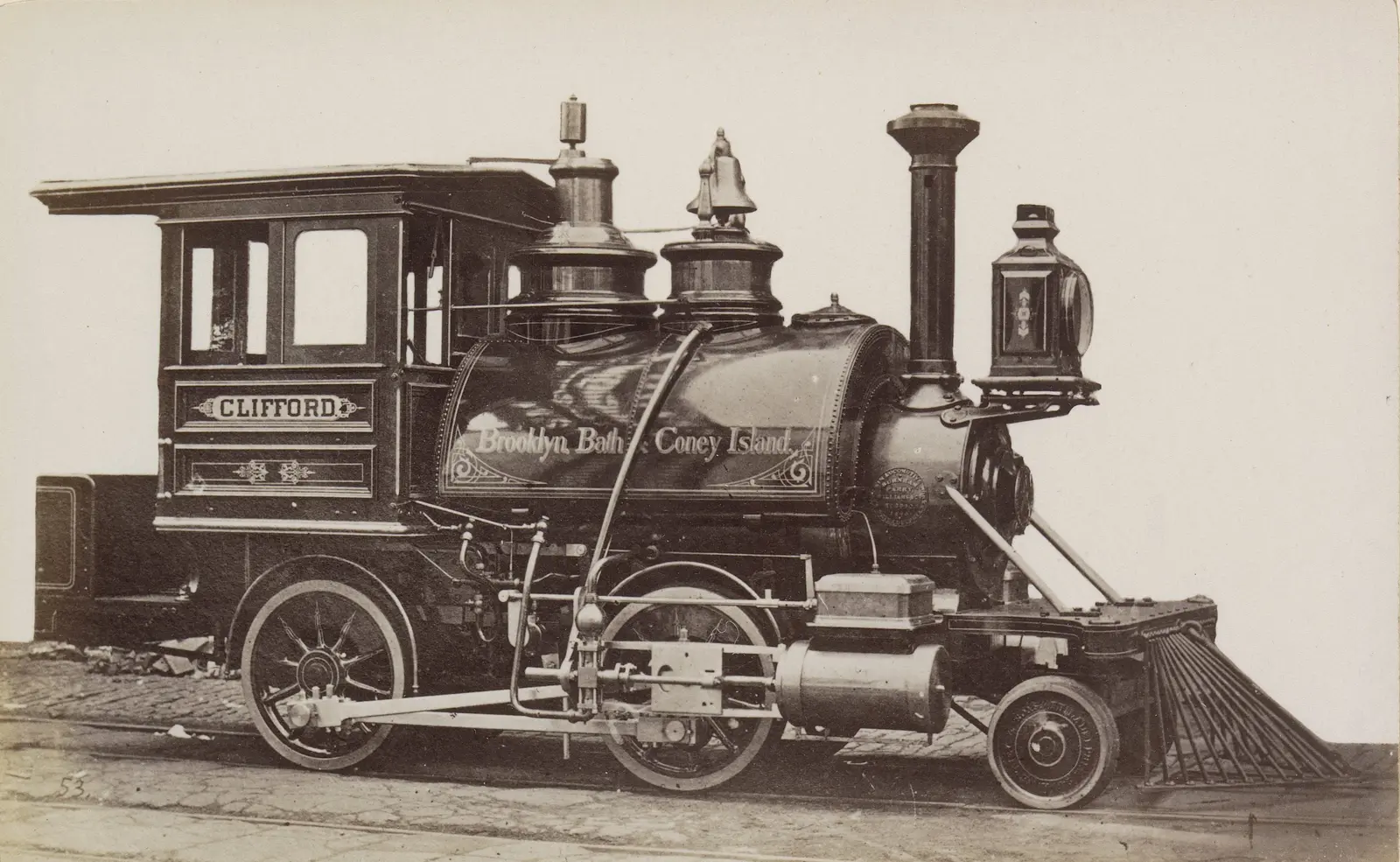
How a Steam Locomotive Works: Its Exhaust Drives the Draft
A steam locomotive burns fuel such as coal to boil water, and steam pressure pushes pistons that turn its wheels. Used steam then pulls air through the fire.
Picture credit
"Amerikaanse stoomlocomotief, RP-F-2001-7-998-11 (cropped)" by unknown creator — https://commons.wikimedia.org/wiki/File:Amerikaanse_stoomlocomotief,_RP-F-2001-7-998-11_(cropped).jpg — CC0 1.0 (https://creativecommons.org/publicdomain/zero/1.0/); modified: cropped: the crop published on Wikimedia Commons, cut from the album page; no further change here
Railways
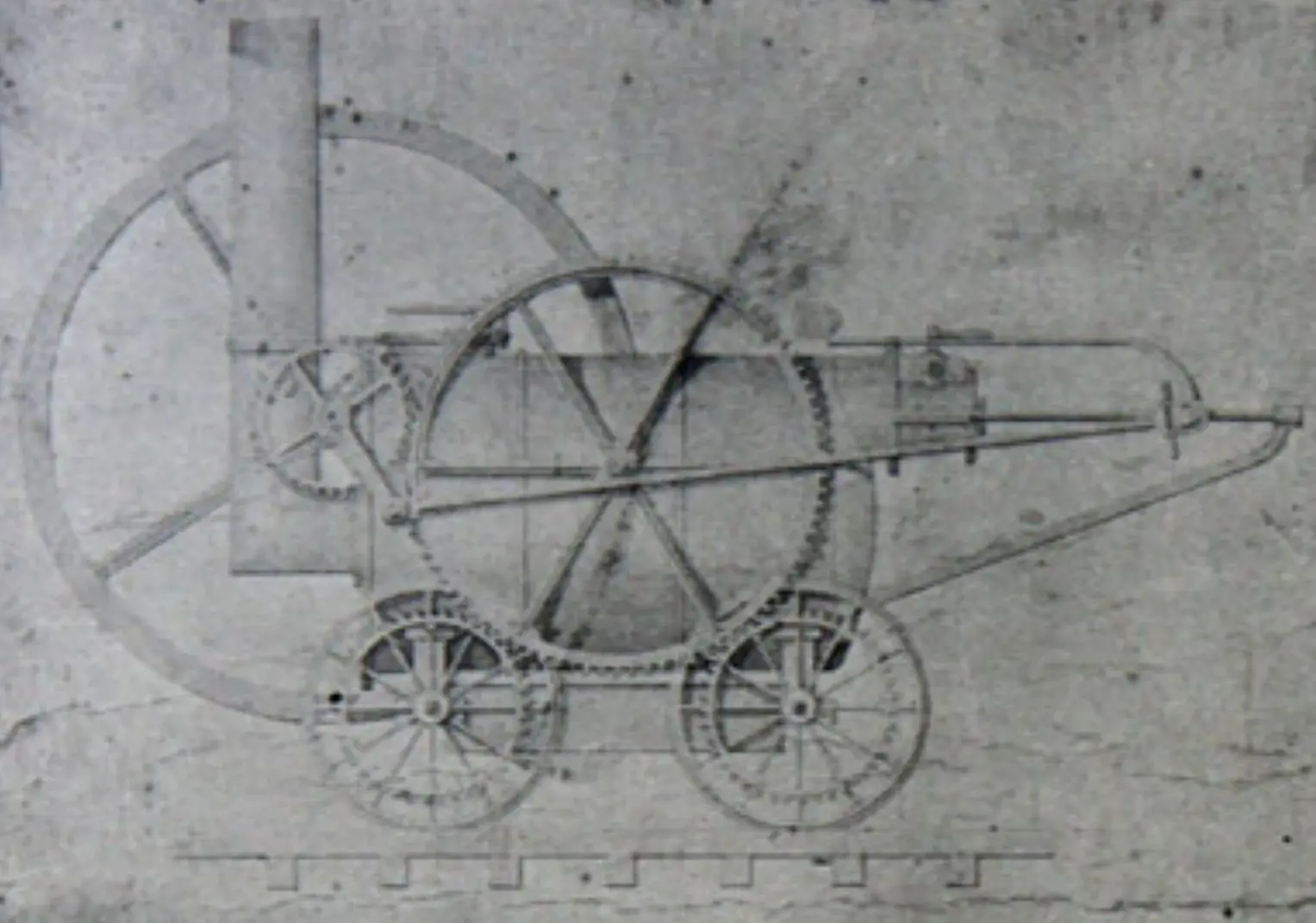
First Known Steam Locomotive Run: 1804, Slower Than a Walk
Richard Trevithick's 1804 letter gives his tram engine above nine miles in 4 hours 5 minutes. With stops, the 9 to 9¾ miles on record average below a walk.
Picture credit
"Newcastle Locomotive, drawing dated 1804" by Richard Trevithick (as credited on the file page) — https://commons.wikimedia.org/wiki/File:WP_Trevithick_-_Newcastle_Locomotive.jpg — Public domain (US: drawing dated 1804, creator died 1833; the 1934 book printing named on the file page is a faithful copy; earlier publication not traced, not traced back; elsewhere: creator died 1833, life plus 70 expired)
Railways
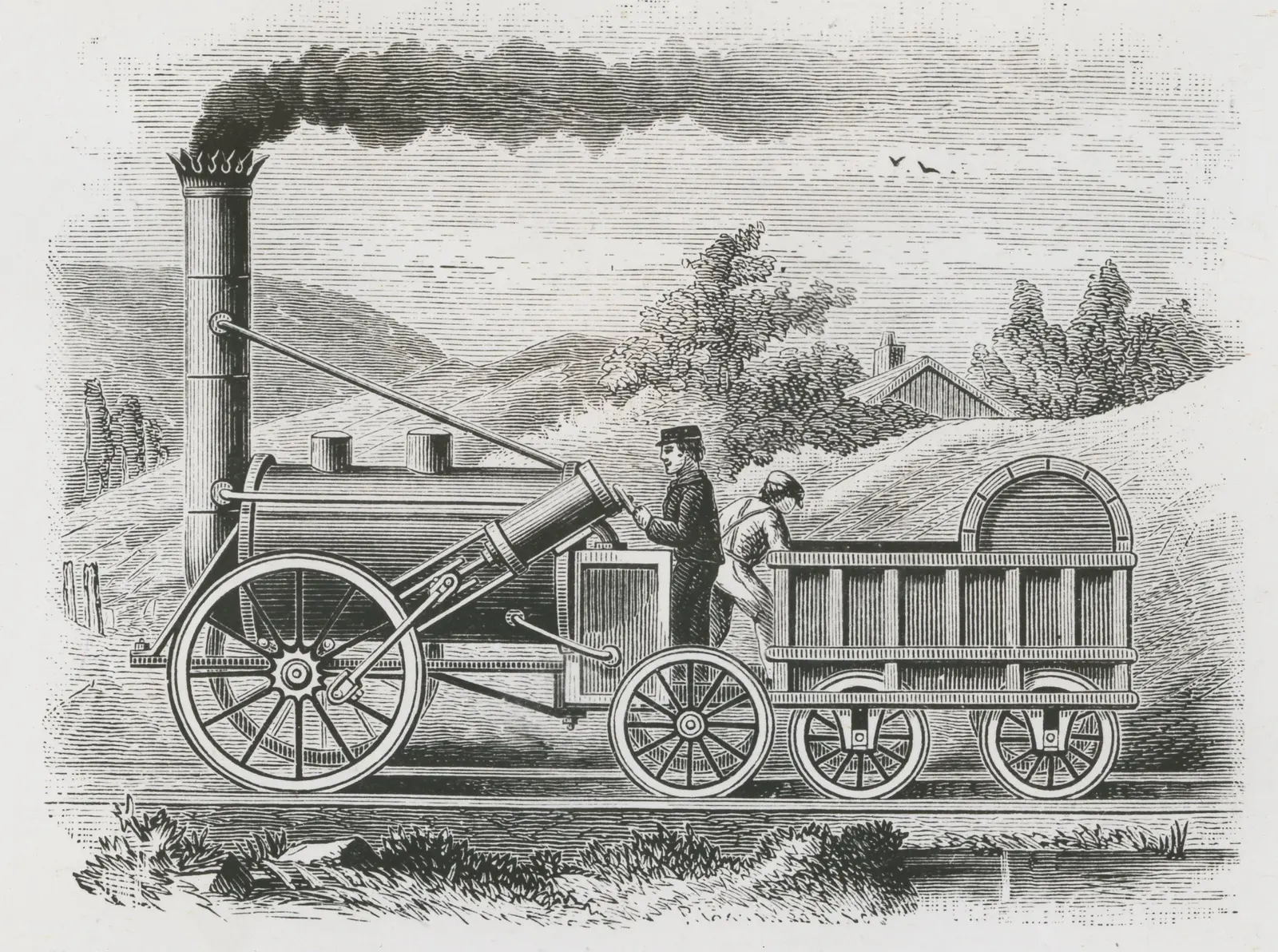
Stephenson’s Rocket, 1829: Booth Claimed the Tube Boiler
Stephenson’s Rocket won the Rainhill trials in October 1829. Henry Booth claimed its many-tube boiler in 1830; the steam blast has rival claimants too.
Picture credit
"George Stephenson's Locomotive, the "Rocket" (cropped)" by unknown creator — https://commons.wikimedia.org/wiki/File:George_Stephenson%27s_Locomotive,_the_%22Rocket%22_-_DPLA_-_eecacab18bb21c2739be253c7d20c0be.jpg — Public domain (US: published in London in 1888 per the sleeve note and the file page, before 1931; elsewhere: engraver unnamed; a working engraver of 1888 would have to have died after 1955 for the life+70 term to still run); modified: cropped: engraving only, archive sleeve and printed caption removed
Railways
Air Brake, Patented 1872: Losing Pressure Stops the Train
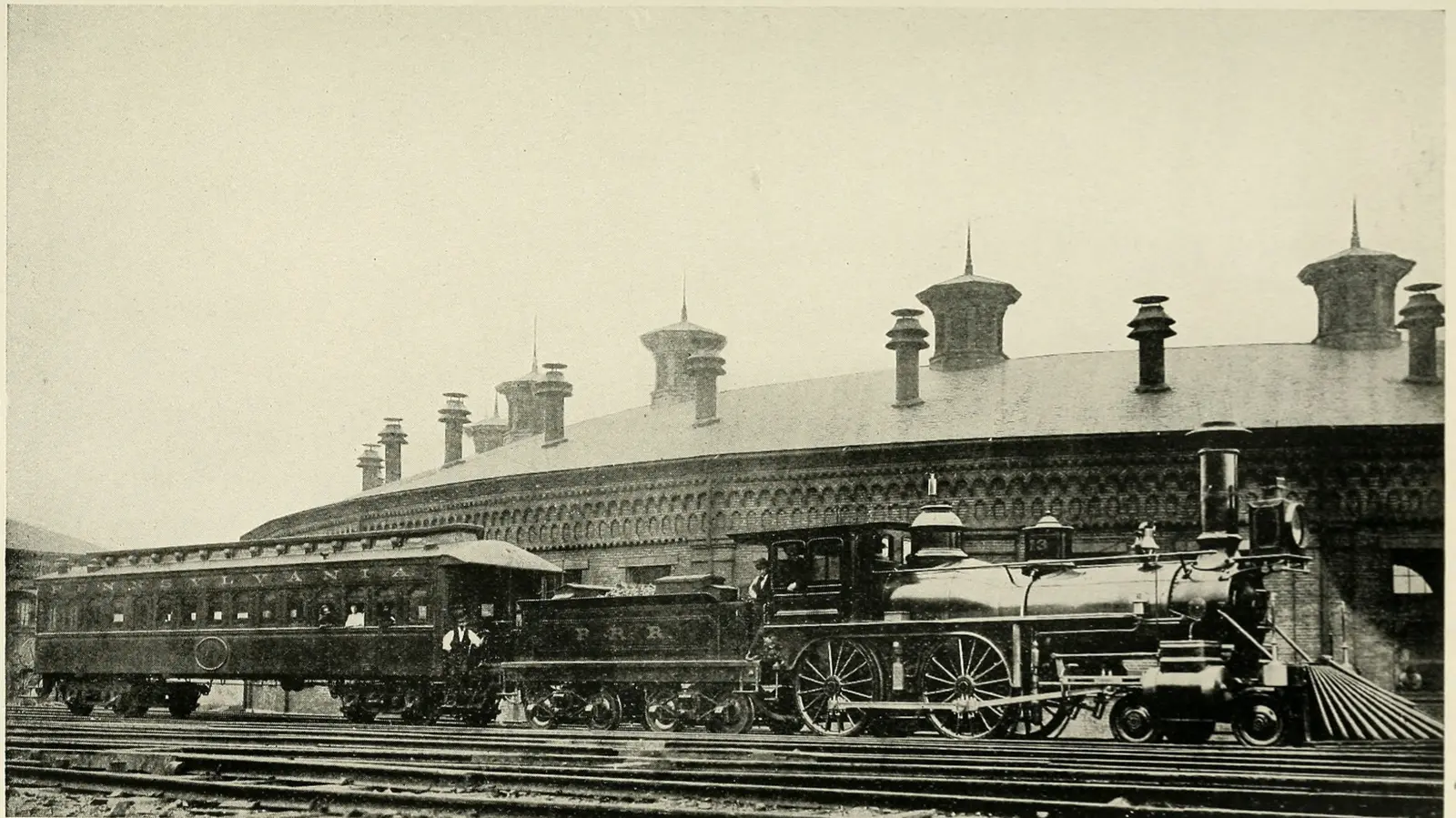
George Westinghouse's 1872 patent: each car stores air, and a fall in pipe pressure applies its brakes. By the 1901 company book, so does a burst hose.
Picture credit
"Train used to test Westinghouse Air Brake in Pittsburgh (cropped)" by unknown creator — https://commons.wikimedia.org/wiki/File:Train_used_to_test_Westinghouse_Air_Brake_in_Pittsburgh.png — Public domain (US: published in Leupp, George Westinghouse: His Life and Achievements, Little, Brown, copyright 1918, file page gives 1919, both before 1931; elsewhere: photographer unnamed, an anonymous work published more than 70 years ago); modified: cropped: printed book caption below the photograph removed


